- Overview
- Welcoming and Introduction (Cover Slide #1)
- About us (Slide 2)
- Programs (Slide 3)
- Production: Time out of Time (Slide 4)
- Questions and Answers 1
- Purpose (Slide 6)
- Evaluation and Assessment (Slide 7)
- Questions and Answers 2
- What we expect from you (Slide 8)
- What you should expect from us (Slide 9)
- Discussion Points (Slide 10)
- Feedback from Artists
Overview
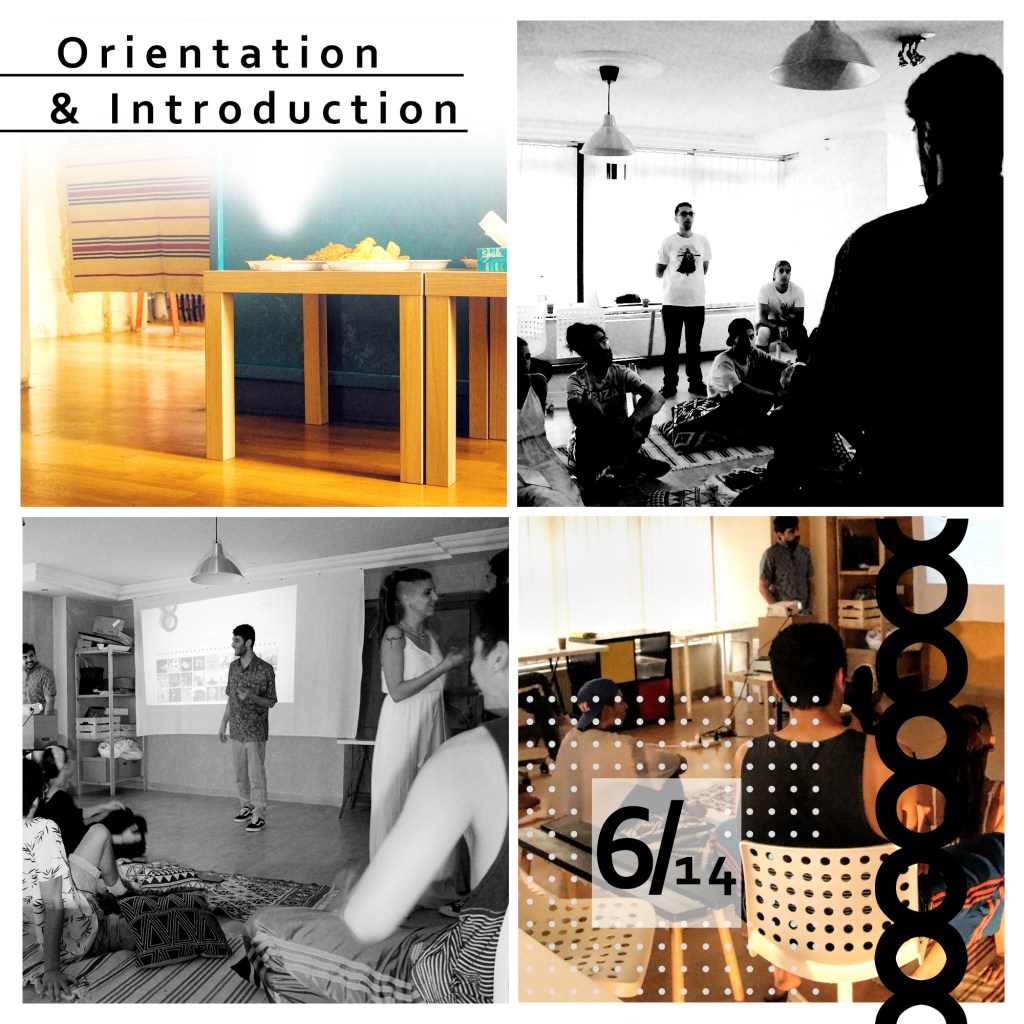
This document includes the English transcript of the Orientation presentation conducted on 6/14/2019 to introduce Studio 8’s team, purpose, scheduled productions. the secondary objective of the presentation includes gaining feedback from the artists regarding our proposed Evaluation and assessment methodology, and also our proposed capacity building functionality, in order to gain insight regarding their specific needs and also increase their involvement and contribution, and instill a sense of ownership. The tertiary objective is to discuss practice schedules to ensure having an efficient schedule that is convenient for all the participants.
Presented by:
- Abdulhadi Nahleh
- Bashar Alsawaftah
Welcoming and Introduction
Abdulhadi: I haven’t seen many of you for a while, I am very glad to see you all here, Welcome to the new Studio, as you can see, the studio is still not completely finished, it will be finished soon; you will see in the near future as we practice some additions, people coming in and coming out to do their job, so please bear with us. So, I am Abdulhadi Alnahleh from Studio 8, this is Bashar from Studio 8, Bashar please tell us more about yourself and how you joined us.
Bashar: Hello Everyone, most of you already know me, some of you are new faces to me, I joined Abdulhadi from approximately the beginning of the year, I’ve known him for quite some time now, when you see our presentation and the idea behind studio 8, you will better understand why I decided to jump head first and stick with him in order to make their idea a reality and hopefully we’ll all make it bigger collaboratively. That basically sums it up for me.
Abdulhadi: We also have Anas, Ren, and also some of our colleagues who weren’t able to join us today, Safi alsakran, his family name is alSakran, and we also have Martina.
About us
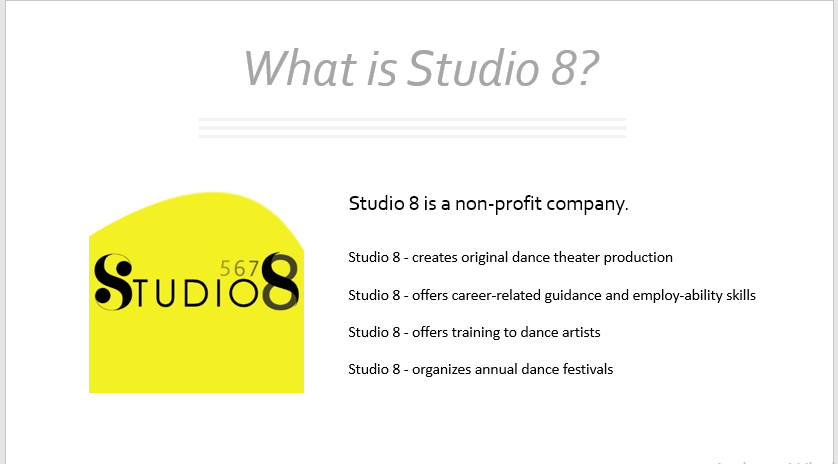
Abdulhadi: So, Studio 8, is a non-profit company, and starting this year, we are officially established as a production house, we develop and create our own productions, we conduct research, schedule and make open calls for dancers, and we make pieces to be performed in various galleries and museums. The duration of each piece is between 30 minutes up to an hour.
Programs
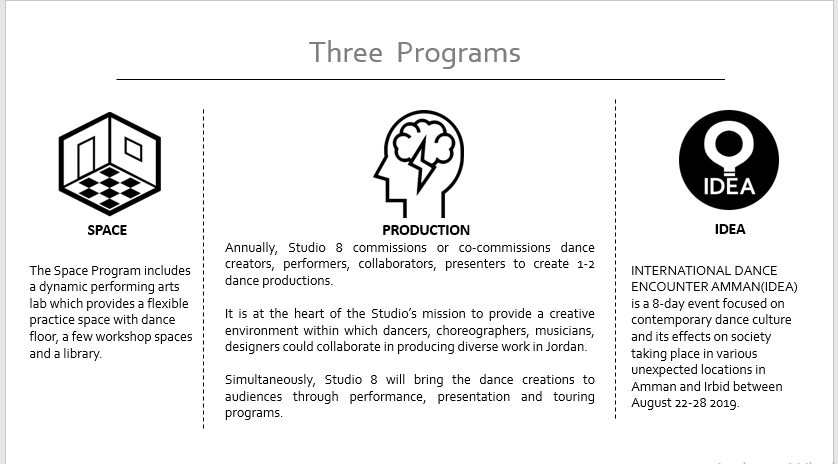
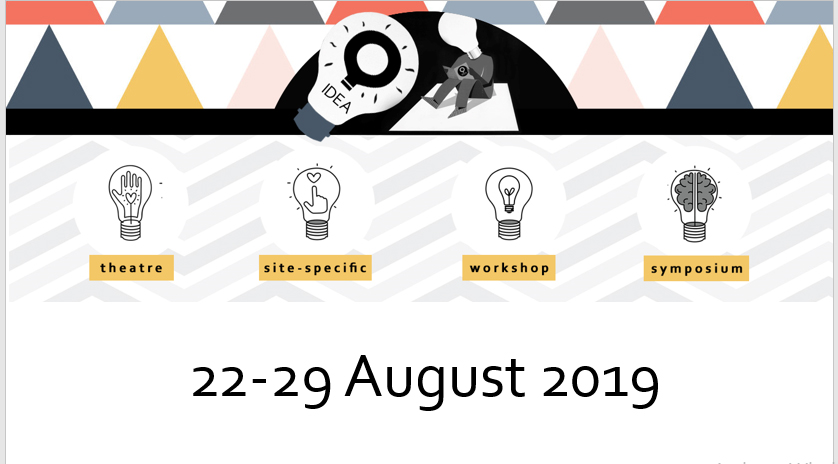
Abdulhadi: This year in Studio 8, we usually have 5 programs, we are starting with 3 main programs for 2019. First of all is the Space itself, and we don’t only mean the location, there will be a library, and resources that I have been collecting for the past 3 years, we also have previous researches, and we have also gained the rights to screen dance-related movies. The space will also be considered as a lab, we will offer professional consultation to aid you in fully and professionally developing your own productions. and also it will be a space for you to practice, but of course with prior coordination, because we do have certain working hours, and certain times that are already booked for practicing the productions that are already in place, which you will be a part of. The 2nd thing is the creative productions, studio 8 aims to produce 2-3 in house productions per year to be showcased, excluding of course our collaborations with other entities, which are scheduled to happen throughout the year. 3rdly is the IDEA® platform, I will not get into much detail regarding this, but what I can tell you, is that it will be a huge platform for us to showcase our work alongside some of the best producers. As I said,
I will provide you with more detailed information when the time comes.
Production: Time out of Time
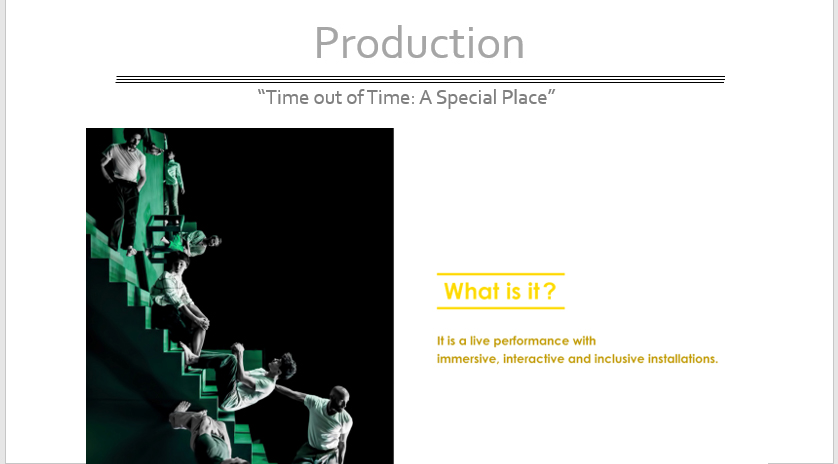
Abdulhadi: Time out of time is studio 8’s new piece for 2019 and 2020, inspired by the concept of liminality, it is a work in progress so far, the final performance is scheduled to take place in 2020 with a duration of 1 hour, however this year in IDEA ® it is scheduled for 30 minutes only. The piece is intersectional and Multidisciplinary, it consists of 3 main components; Dancing, Sounds; we will hopefully have a music producer joining us to make our own original sounds for this piece, and also a multimedia artist for lights and projections…etc.)
Production: Wujoud wa Hodoud
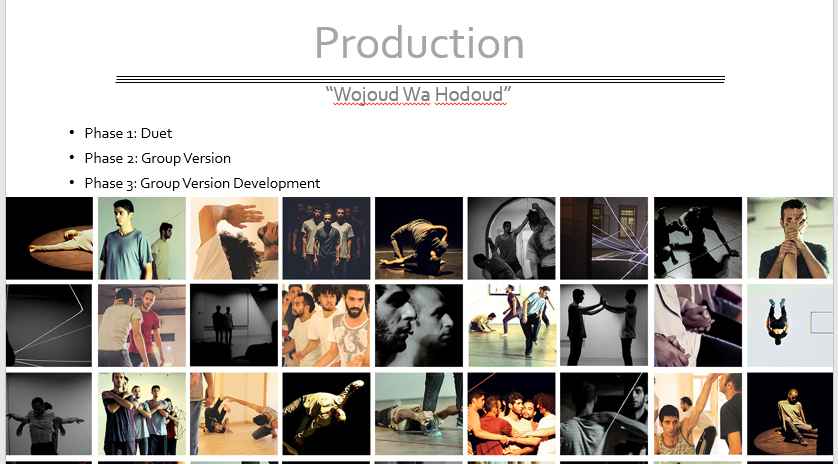
Abdulhadi: Wujoud wa Hudoud is a piece that started in 2017, it initially started as a duet, with me and Anas, which was the first phase of the piece, we initially performed it in the French institute, and also performed it in Downtown contemporary art festival (DCAF) in Egypt, after that, me and Anas saw untapped potential in the piece and wanted to make it bigger, which is how phase 2 started which is the group version of the piece, we went back and developed it further, we increased the number of performers from 2 to 8 people, and then performed in the National Center for Culture and Arts (NCCA), and Hakaya Albalad Festival, and now we want to further develop the piece with new dancers and new concepts and visuals and installations, we have three installation options, we are going through a selection phase and it will be performed in Studio 8’s new platform IDEA®.
Questions and Answers 1
(Q1) Qattan: so we have until august to practice and perform?
(A1) Abdulhadi: Yes
(Q2) Amer Dahman: so in august we will be finalizing the final phase of the Wujoud wa Hodoud or Time of time?
(A2) Abdulhadi: by August Wujoud wa Hodoud’s third phase needs to finished and ready to be performed to audiences, however for time out of time, we need to have fully completed 30 Minutes of performance, and since it is a work in progress, it is still changeable, modifiable, which we will work on together
(Q3) Amer Dahman: so in August, Wojoud wa Hodoud would be the same piece, but an evolved version of it?
(A3) Abdulhadi: true, but this time it will be accompanied by original sounds and visuals as well, and even the movement will change; Anas feels strongly about adding 2 additional layers in the choreography, we already made a layer, and then Anas went back and re-watched the previous performances, analyzed the movements, and did further research, and accordingly this year, we aim to add more layers to the piece
(Q4) Rawan: So for time out of time, you said that only half of the production needs to be finished and performed, so if someone like me, who is going to be gone for a while, there is an opportunity for me to jump in on a later stage?
(A4) Abdulhadi: Definitely, yes
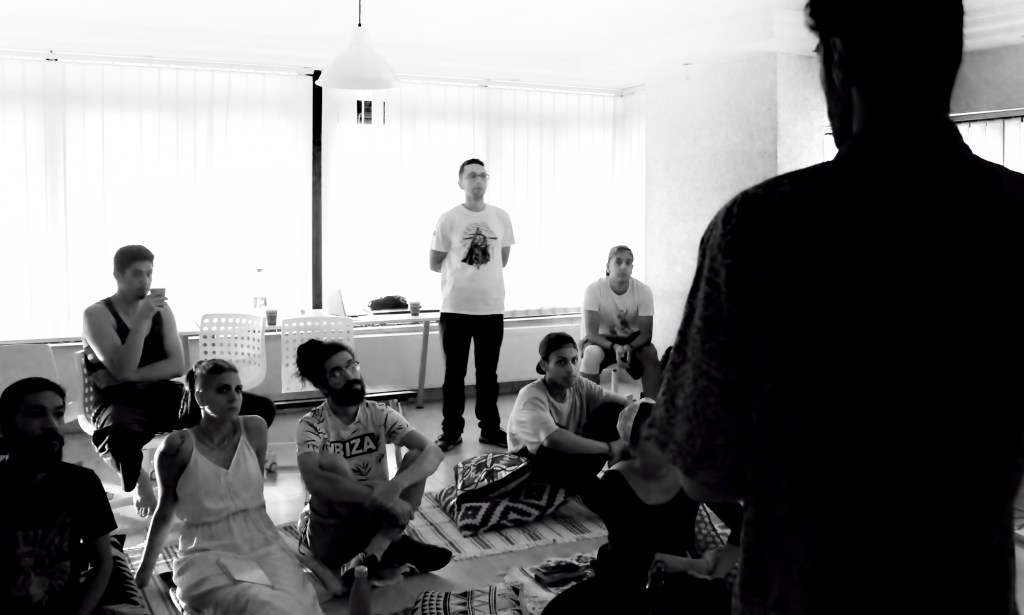
Purpose
Bashar: Hello again, I want to tell you more about the purpose and our systematic approach that, as an NGO, will hopefully please our funders and partners, ensuring our sustainability; therefore, we developed a systematic measurable approach to reach our goals; to be able to trach our progress and assess ourselves, we developed a performance management system that is tailor fitted to our specific type of functionality, it has been built through excessive research and benchmarking with global and international institutes, companies…etc. we developed our own in-house performance management system, which will be discussed in more detail shortly. Through proper assessments and evaluations, we will be able to pinpoint our specific needs for capacity building to bridge the gaps between the requirements for each individual, and accordingly we will be able to develop career paths, and specific capacity building efforts, through workshops, masterclasses, and basically aiding us in focusing on the specific gaps to be bridged, through periodic assessments and evaluations we will be able to track our progress, growth, and development. Using this systematic approach, we will all be able to develop and create more high-quality productions that can be performed locally, regionally and even on a global/international scale, for Audiences of thousands or tens of thousands of people or even possible more. Once we reach this point we will be able to do partnerships and collaborations with various entities, tours, exchange programs, the sky is the limit, where ever your imagination takes you, we can probably get there.
Evaluation and Assessment
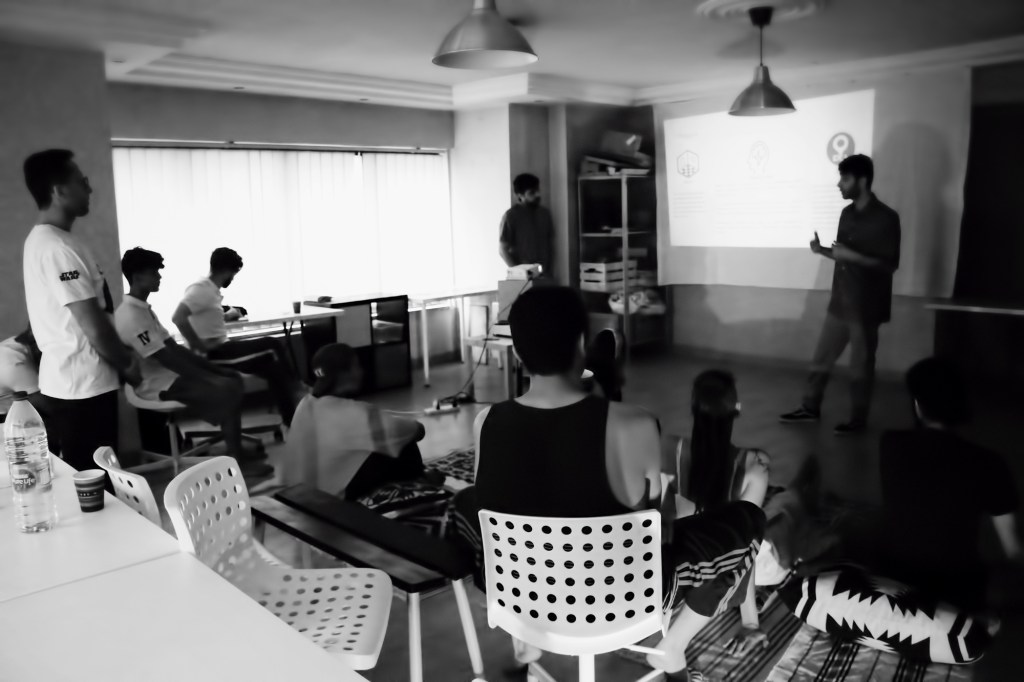
Bashar: Now, I want to give you a better understanding of the developed evaluation system, it is based on three main important verticals, they are all equally important, the first vertical, which is very important for Studio 8, which is the behavioral competencies; the behavioral competencies revolve more around “how” things are done instead of focusing on the “What” is done, the impact of “how you do things” on others, to be able to cultivate a creative and healthy culture, we need give these things their proper weights, for example, how we react to each other’s ideas, the transparency, giving credit where credit is due, integrity, and so on and so forth, there is a specific way of how these things are measured in a systematic way, and of course, these evaluations will not be happening in isolation or silos, we will be collaboratively working on this, agreeing to assess ourselves, assess each other, in order to be able to take solid steps into a successful future. 2nd vertical revolves around professional skills, which is very important, due to our experience and relatively long presence in the local artistic scene, we noticed a weakness, or not necessarily a weakness, but a gap that needs to be filled regarding this specific matter, to make myself clear, here’s a simple example, a person might be a great artist, knows exactly what and why they are doing what they do, however sometimes they need to communicate with certain entities to be able to gain their support, exchange program, propose a production, an idea and so on, certain skills are needed to be able to do that successfully, to be taken seriously from either local or international entities, a more professional way to deliver a message or the idea, in a way that is clearly understood by the receiver in a professional manner, therefore we will also concentrate on developing these skills. And also, as part of developing the professional skills, there are parts in the process of making a production a reality, certain tasks that will be shared with the artists in order to give them more insight on how these processes usually go. So basically we are looking to develop the most comprehensive way to develop ourselves in this field. The third vertical is the technical dance skills, which consumed the most research time, where we benchmarked with educational institutes on how they assess and evaluate dancing skills, what separates levels, what differentiates a beginner dancer, from an intermediate one, to advanced, to a professional, how they systematically measure all those elements.
Questions and Answers 2
(Q1) Bashar: I want to ask you guys now, what do you think of this approach, or how do you think is the best way to evaluate any of these verticals, I would love to hear your ideas
(A/Q1) Amer Dahman: Evaluate in regards to what exactly?
(Q1.1) Bashar: For example the technical skills, if we want to assess creativity or improvisation skills, there is a difference between a person who can on the spot do something based on what he/she feels and not be able to explain why, or the idea behind what he/she has done, and a person who is capable of structuring reason, idea, concept, and also there is a difference between that person, and another who is capable of putting the ideas on paper, writing concepts, doing research, basing the idea on something that is more complex. The same goes for professional skills, a person can normally talk, use communication skills, another person may be able to present something, have the right body language when presenting.
(Q1.2) Abdulhadi: I have a really important example as well, for example, a certain person has projects outside, performs in various festivals, galleries…etc. locally and internationally, this thing does not come solely from fame, especially as local artists, we need to reach out, and to reach out, there is a systematic way to do so, there is a specific pattern, certain documents, and procedures that need to be followed to be able to grasp such opportunities, what we want is to share these standards with you, the resources, the networks, the knowledge how to channel a piece, through a certain methodology, we can share with you how to produce the pieces, selling the pieces is a whole different aspect as well, these skills are the skills that we want to develop.
What we expect from you
Bashar: to be able to do this, we expect from you some simple minor things that will be the driving force of our success.
Abdulhadi: time is very important to us, punctuality is therefore crucial; if one person is late, or absent, he/she will affect the entire team, if you’ve seen Wujoud wa hodoud you’ll notice that it is one sequence only, there are no scenes, which means that the 8 people are collaboratively dancing in synchronicity, if one person is missing, he will affect the entire production.Bashar: If someone knows that they’re going to be late, absent, or god forbid something happened, the 2nd expectation is vital; open communication, not only for tardiness, studio 8 is a creative space, any thought, idea, or concern, or anything whatsoever, please feel free to share it with the team, we are one unit, if you want to vent from society, or discuss anything, as a unit we move together, we succeed together, and to able to do so, again, Open communication is everything. The third thing is, since studio 8 is a creative space, it consists of creative people, therefore, please be outspoken, share your ideas, collaborate, your voice is important, your ideas matter, the strength of diverse ideas is also a main factor for success. The fourth and last point is “Show us what you got” please give us 120% of your efforts, in order to standout between competition where ever it may be, we need to be memorable and impactful with our performance, leave an imprint in the minds of the audiences, once we do this, once we collectively give it our all, the easier it will be to get workshops, masterclasses, tours, and all that.
What you should expect from us
Bashar: in return for your 120%, we promise to strive to provide you with the following, first of all, as I said before, the space, feel at home here, 2ndly, the knowledge; workshops, masterclasses, library, networks, will all be at your disposal, 3rd, exposure, I know many of you hate this word, some of you have been offered work before in return for “Exposure” , “Oh yeah it’ll be good exposure”, but I mean exposure in a different way, you won’t be doing shows in City mall for example, it will be on a very different scale, 4th is travel, we will aim to create opportunities to showcase outside, tours, exchange programs, and so on.
Abdulhadi: and we already have been working on this since the beginning of the year, we already started conversations with other entities in discovering these opportunities, in a month we already have a show in Africa, Rwanda.
Bashar: finally, the 5th point, “Cash rules everything around me” there will be a monthly salary for each committed artists, who meets the expectations. So basically the 5 things are: Space, Knowledge, Exposure, Travel, and a monthly salary, and of course the opportunity of being surround by lovely creative supportive people.
Discussion Points
Bashar: finally, we would like to discuss certain points, the first one, which is very important is scheduling.
Abdulhadi: Yes, practice hours, number of practice sessions per week, in the evening or in the morning? We will go over it individually to see your availability, and come up with a schedule that is convenient for everyone, taking into consideration your day jobs’ working hours and so on. I want to also further discuss the capacity Building, for this year, we want to concentrate on task distribution, as if we are a normal dance company, Ren, do you want to talk about this a little bit more?
Ren: what am I going to talk about, sorry? Oh so the capacity building is more career oriented, because all of you have other skills, and a lot of time, you want to put everything together to create something you can sell, so therefore there will be money involved, but sometimes, it’s really hard to get support, so here in studio 8 we have the resources, for example management skills, and also we have the network, so throughout the whole dance making, we also break down the process, for example, plan the dance; how to make it, then how to sell it, and then another important thing, is that you spend so much time to make one thing, music as well, how to expand the life expectancy of that work, we expect to make it four years for example, and other than that one show, there are other ways to sell it more, for example video is one thing. Also add another technology so you opened up all the new tech, add a design element and you can go to Amman design week for example, they have 90,000 visitors, so, it is an industry, but we need to find our own TOR, our job titles.
(Q1) Amer Dahman: so let me try to explain this to see if I can get this straight, so every dancer has another role other than just their participation as a performer?
(A1) Bashar: Almost, not in that rigidity, so everyone has skills, but they might want to expand into another discipline, by knowing what specific skills that path needs, we can specifically target those needed for you to be able to grow in that field, so, in a way, you can collaborate with those in charge of those fields, to get the knowledge from them as well, to be able to take your first steps in that field.
(Q2) Qattan: so you mean in terms of knowledge?
(A2.1) Bashar: yes, and all the other aspects that are required
(A2.2) Abdulhadi: and capacity building isn’t only a week long, there will be symposiums, and a lot of experienced people in many disciplines, so we are also trying to pave the way, that you may be able to tag along, if you’re interested in lighting, or sound, that expertise will set up, you can then tag along, understand how the work is done, how the process flows.
(Q3) Rawan: You’re primarily a movement, or dance focused, are you considering maybe in the future of becoming multidisciplinary? For musicians for example?
(A3) Abdulhadi: we want to focus on Dancing, to make sure that the direction is clear, we don’t want to confuse the audiences, however we will collaborate with other musicians, or artists in other disciplines, we love co-productions. but we can support with our network, with our knowledge, all the resources that we have are available for all disciplines, but we will primarily focus on dance.
(Q4) Qattan: so a person can learn more stuff than just the performance? Things and skills that can be put on a CV or certain skills that will benefit him/her in their work life later on?
(A4) Abdulhadi: yes, definitely, there are many opportunities there that are just waiting to be taken, if someone wants to continue a master’s degree in dance, it is there if someone wants to go deeper into production, opportunities are there, if you want to give workshops not receive them, opportunities are there, we just need to grasp them.
(Q5) Daniel: if I have an Idea that I want to make, can I like present it to you, and you’ll help me?
(A5) Abdulhadi: yes, definitely, if you feel like it, you’ll tell us the idea, I can direct you to the right resources, or your concept is really new this type of research, or we can do a research together, lead you to the right resources from our library, do artistic research together, and this is a really long process but we’ll be there.
Feedback from Artists
Nadine: “I was really surprised, it exceeded my expectations, I thought we were going to talk about the production and the training, but when I saw that you were talking about capacity building and all that, it felt more comprehensive, like you were really looking at it from different angles.”
Ziyad: “I love what you guys are doing, it’s a great step forward, to create this industry, and have standards, I think it’s a good structure and very systematic.
 Wujoud wa Hodoud